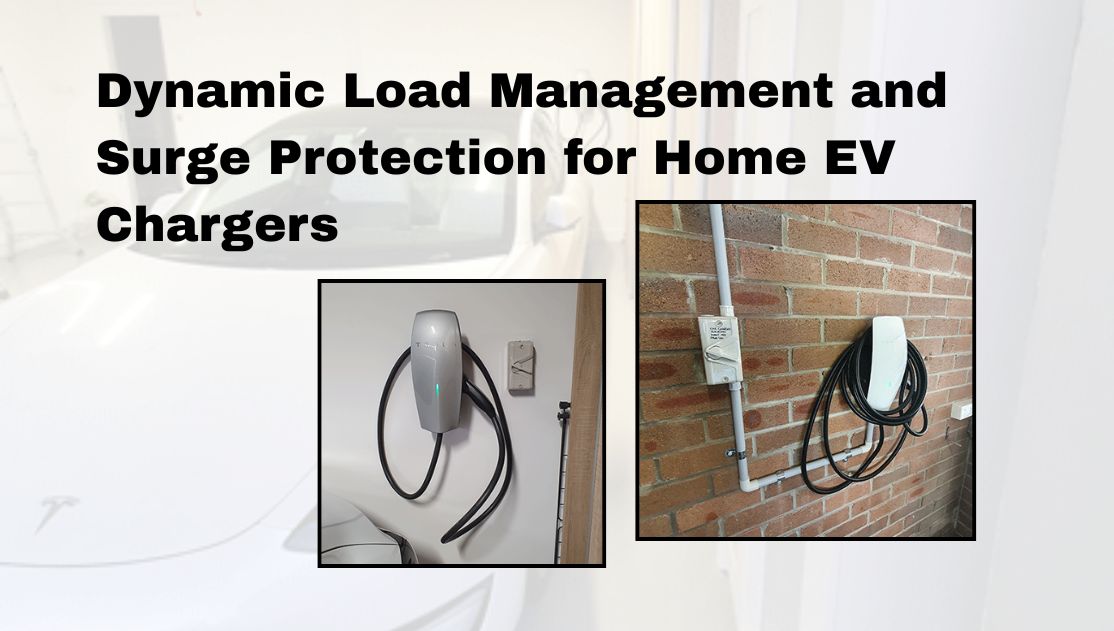
Switching to an electric vehicle is exciting, but it also introduces new demands on your home’s electrical setup. As more households install EV chargers, the need for proper load control and strong protection systems has become essential. Two of the most important features for a safe and steady home charging experience are dynamic load management and surge protection.
While both may sound technical, they are simple ideas that play a huge role in keeping your home safe and your EV charging system running smoothly. This guide breaks down how each works, why they matter, and how you can make the right decisions when installing a home charging unit.
1. What Is Dynamic Load Management?
Dynamic load management, or DLM, is a system that monitors your home’s total electrical usage and adjusts your EV charger’s demand to prevent overload.
Every home has a maximum electrical capacity. When too many appliances run at the same time, it can place pressure on the switchboard and cause breakers to trip. An EV charger draws a significant amount of power, so without proper control, it could push the system beyond its limit.
DLM solves this by watching how much electricity the house is using and regulating the charger accordingly. If the air conditioner, oven, hot water system, and dryer are running at once, DLM temporarily reduces the charging speed so the total load stays within the safe limit. Once the demand drops, the charger automatically increases its power again.
Why This Matters
- Prevents blackouts and nuisance tripping
- Protects your switchboard from stress
- Allows you to use household appliances without worrying about overload
- Let’s you charge your car at the fastest safe speed
In busy homes with multiple power-hungry appliances, DLM becomes a helpful tool to maintain balance.
2. How Dynamic Load Management Works at Home
A typical DLM setup includes:
- A load sensor on the main supply
- A communication link between the sensor and the EV charger
- A control unit that adjusts power output
These components talk to each other in real time. When the house is quiet, the charger moves to full capacity. When the house is active, the charger slows down just enough to prevent an overload.
For example, If your household’s maximum capacity is 63 amps and your usage reaches 55 amps because the oven and air conditioner are running, the system will allow the EV charger to use only the remaining safe amount.
This makes it ideal for homes with older switchboards or properties that are not yet upgraded to three-phase power.
3. Why Surge Protection Is Essential for EV Chargers
Surge protection shields your charging equipment and home electrical system from sudden voltage spikes. These spikes can occur during storms, network faults, or unexpected changes on the grid.
EV chargers contain sensitive internal electronics. Even a short surge can cause expensive damage or render the charger unusable. Installing surge protection ensures that any spike is absorbed and redirected safely before it reaches your charger.
What Causes Power Surges?
- Lightning strikes
- Faults in the distribution network
- Sudden changes in power supply
- Damaged transformers or lines
- Appliances switching on and off rapidly
While many people think only storms cause surges, the truth is that smaller spikes happen regularly. Surge protection quietly handles them in the background to keep your equipment safe.
4. Types of Surge Protection for EV Charging
Surge protection falls into two main categories:
Primary Surge Protection
Installed at the switchboard. This protects your entire home from external surges that come from the grid.
Secondary Surge Protection
Installed close to the EV charger. This offers targeted protection against internal or residual surges.
For the strongest safety, both levels are recommended. Together, they act like a double shield, ensuring nothing reaches the charger or vehicle.
5. Do You Need Both DLM and Surge Protection?
While DLM prevents overload, it does not protect against voltage spikes.
Surge protection, on the other hand, protects against spikes but cannot regulate ongoing electrical load.
They complement each other perfectly.
You need DLM if:
- Your home has a limited electrical capacity
- You use high-wattage appliances
- You want to avoid tripping breakers
You need surge protection if:
- You want to protect expensive charging equipment
- You live in an area prone to storms
- You have sensitive electronics
- You want peace of mind while charging overnight
Most homeowners benefit from having both systems. It keeps the home comfortable, prevents unexpected shutdowns, and protects the investment in both your charger and your EV.
6. How DLM Makes Charging Faster and More Convenient
With DLM in place, you can enjoy faster charging whenever your household demand is low. For example, late at night when everyone is asleep, your EV charger can automatically use more power without any manual control.
This means:
- You wake up to a fully charged car
- You don’t need to schedule your charging around appliance use
- You can run your home normally without second-guessing
- You avoid the cost of unnecessary upgrades, especially if full three-phase power is not needed yet
Many modern chargers support DLM, making it easy to add during installation.
7. Surge Protection Extends Your Charger’s Life
EV chargers are not cheap. Surge protection is like inexpensive insurance that keeps equipment safe from harm. It also:
- Reduces repair costs
- Prevents internal damage
- Keeps charging performance steady
- Protects your car’s battery from an unstable power supply
A single surge event can ruin internal boards or chips. Surge protection gives your charger a long and steady lifespan.
8. Installing EV Chargers the Right Way
The best time to add DLM and surge protection is during installation. This ensures your system is designed as a whole and avoids unnecessary rework later.
A licensed installer can help you decide:
- Whether your switchboard can handle the charger
- If your home needs load management
- What type of surge protection is suitable
- Whether your property needs a power upgrade before installation
Good planning saves money, reduces safety risks, and sets you up for effortless home charging.
Final Thoughts: Why do you need a Professional?
Home EV charging can be simple and worry-free when the right foundations are in place. Dynamic load management keeps your electrical system balanced, while surge protection shields your charger from harmful spikes. Together, they safeguard your home, protect your investment, and help your EV charge smoothly every day.
It’s worth mentioning the role of a skilled installer here. Many homeowners who step into EV charging for the first time find the process far easier when they have someone who understands both the technical side and the practical side of home energy use.
This is where IZCO Electrical often comes up in conversations across Sydney. Their team handles EV charger installations every week and deals with real Australian homes, real household load patterns, and real switchboard conditions. They work with older properties, newer builds, tight switchboards, and homes that need upgrades before chargers can be added.
People appreciate that IZCO looks at the whole picture rather than just mounting a charger on the wall. They understand why DLM matters, when surge protection becomes essential, and how each home’s wiring tells its own story. Their work often feels more like long-term planning rather than just fitting a device.
Many residents say they feel more at ease after installation because the team explains how everything works and how to keep the system steady for years to come. When you hear homeowners talk about smooth charging or trouble-free switchboards after installation, IZCO’s name pops up a lot.
If you ever plan to add an EV charger at home, they’re the kind of crew you’d want taking a look. Not a sales pitch, just a simple observation from how often their name surfaces in discussions about reliable EV charging setups across Sydney.